

Безопасные транзакции
Market Order: A market order is an instruction to buy or sell a financial asset immediately at the best available market price. Market orders are typically used when the priority is to execute the trade quickly, rather than to obtain a specific price http://victorpetlura.com/content/file/pages/kak-rabotaiet-ts-upis-v-fonbiet-rieghistratsiia-koshieliek-i-osobiennosti-vyvoda.html. The issue here is that the final execution price might differ from the quoted price due to market volatility and rapidly changing bid-ask spreads. Basically, you can end up paying a lot more than you ever expected!
Bid and Ask: The bid price is the highest amount a buyer is willing to pay for a financial asset, while the ask price is the lowest amount a seller is willing to accept. The difference between the bid and ask prices is called the spread. A successful day trader will aim to capitalize on the fluctuations in the bid-ask spread to make profits.
Stop-Loss Order: A stop-loss order is a type of trading order that helps protect traders from significant losses by automatically selling a financial asset when it reaches a predetermined price level. This tool is essential in managing trade risk and preventing emotional decision-making during periods of market volatility. This one tool is critical to learn in your efforts to avoid losing money.
Skills you’ll gain: Return On Investment, Financial Reporting, Capital Budgeting, Financial Statements, Financial Modeling, Mathematical Modeling, Statistical Modeling, Regression Analysis, Business Modeling, Income Statement, Financial Analysis, Risk Analysis, Cash Flows, Business Mathematics, Financial Planning, Corporate Finance, Predictive Analytics, Spreadsheet Software, Google Sheets, Microsoft Excel
“I just completed the ABC’s of Trading seminar and have also read a couple different books from your products list, and I have to say that it is very refreshing to hear a realistic approach to trading. I have steered away from these type of investments for years but saw some of your introductory material online, and it sounded so grounded that I thought I might read some of your material.
Investments in digital assets
Most institutional investors believe in the long-term value of blockchain and crypto/digital assets, and plan to scale digital asset investments over the next two to three years. Investors are also interested in investing in tokenized financial assets, and institutions are actively exploring tokenizing their own assets.
Digital assets are rapidly evolving and increasingly integrating into the investment ecosystem. Investors with a long-term outlook may be able to position their portfolios to ride the coattails of this asset class’s maturation and advancement. To manage risk and volatility, though, it’s important to balance digital assets with more stable, conventional investments as well.
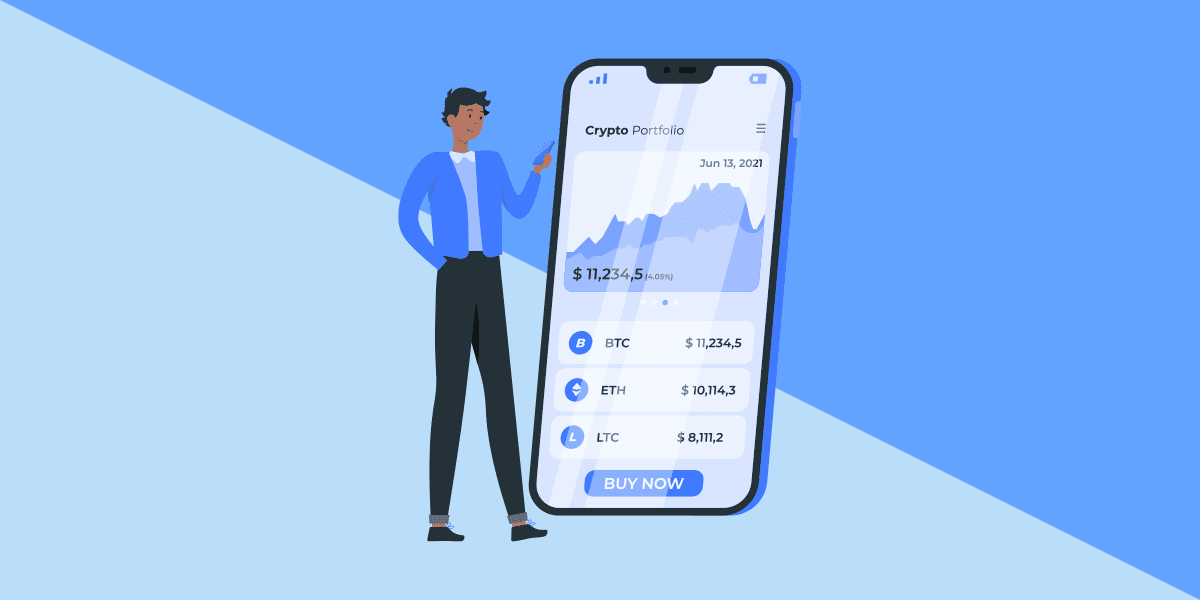
Most institutional investors believe in the long-term value of blockchain and crypto/digital assets, and plan to scale digital asset investments over the next two to three years. Investors are also interested in investing in tokenized financial assets, and institutions are actively exploring tokenizing their own assets.
Digital assets are rapidly evolving and increasingly integrating into the investment ecosystem. Investors with a long-term outlook may be able to position their portfolios to ride the coattails of this asset class’s maturation and advancement. To manage risk and volatility, though, it’s important to balance digital assets with more stable, conventional investments as well.
To enable appropriate safeguards and plans that can be built, investment time horizons have been extended, with most organizations planning to scale investments over the next two to three years. However, institutions see tokenization as highly promising, and are looking to move more quickly toward investing in tokenized assets, as well as tokenizing their own assets over the next two years. Hedge funds, in particular, are the most bullish on their timeline to begin investing.
In addition, 71% of respondents with AUM/AUAs <$1b indicated they allocate >1% of their portfolio to digital assets vs. 60% of all respondents, while only 45% of institutions with >$500b in AUM/AUA indicated they allocate more than 1% of their portfolio.
Access to cryptocurrency pairs
With a focus on security, flexibility, and personalized service, Abra is a trusted partner for sophisticated investors seeking meaningful exposure to the cryptocurrency market and emerging digital asset opportunities.
The base currency is always the first cryptocurrency in a crypto trading pair. The base currency is the base to which the other currency is compared – if we look at our EUR/USD example from earlier, euro (EUR) is the base currency. For BTC/USDT, BTC is the base currency. The ticker before the “/” is always the base currency in crypto. Another example is ETH/BTC, in which ETH is the base currency.
It’s important to ensure your Cryptocurrency Pairs provide complimentary resources such as analysis, education, and risk management tools. IC Markets and eToro collaborate with top analysts to bring the most up-to-date news and insights to traders.
With a focus on security, flexibility, and personalized service, Abra is a trusted partner for sophisticated investors seeking meaningful exposure to the cryptocurrency market and emerging digital asset opportunities.
The base currency is always the first cryptocurrency in a crypto trading pair. The base currency is the base to which the other currency is compared – if we look at our EUR/USD example from earlier, euro (EUR) is the base currency. For BTC/USDT, BTC is the base currency. The ticker before the “/” is always the base currency in crypto. Another example is ETH/BTC, in which ETH is the base currency.
It’s important to ensure your Cryptocurrency Pairs provide complimentary resources such as analysis, education, and risk management tools. IC Markets and eToro collaborate with top analysts to bring the most up-to-date news and insights to traders.